Your Wine Story Is Killing Your Sales
Stop using wine jargon that confuses customers. Learn why simple, human descriptions sell more wine than technical tasting notes. Real wine marketing examples and actionable tips inside.
Last weekend, I went to a Sacramento wine bar with friends who don't work in wine. It's always a lesson in how real people buy. I watched the sommelier wax poetic about vineyard blocks and French barrels. My friends politely nodded, then ordered the bottle of Chardonnay that "tastes like sunshine."
That wine wasn't better. Hell, it wasn't even close. I didn't say anything to my friends, but sitting there, something clicked that I'd known for years: People don't buy what's best. They buy what's easy to understand.
Overall, Everyone In The Wine Industry Has Been Guilty Of This
Look, I get it. We make wine because we're passionate about it. We know the difference between a hillside block and valley floor fruit. We can taste the difference between American and French oak. We live and breathe this stuff.
But customers don't.
They're not stupid. They're just busy. They want to buy a bottle of wine, not get a geology lesson. While we're explaining why our terroir is special, they're thinking about whether this wine will go with Thursday's takeout pizza.
…One of the wine industry’s most used stock photos of “Wine glasses with hands”
The Problem with Wine Descriptions
We write descriptions like this:
"Our estate Cabernet showcases the unique microclimate of our south-facing vineyard, with 18 months in French oak delivering complex notes of cassis, cedar, and graphite with structured tannins and a long mineral finish."
Meanwhile, our customers are thinking: "Will I like this with my burger?"
The disconnect is real. We're speaking fluent wine-nerd while our customers speak human. In a world where every wine claims to be "handcrafted" and "small-batch," being human becomes your biggest advantage.
The Framework That Actually Sells Wine
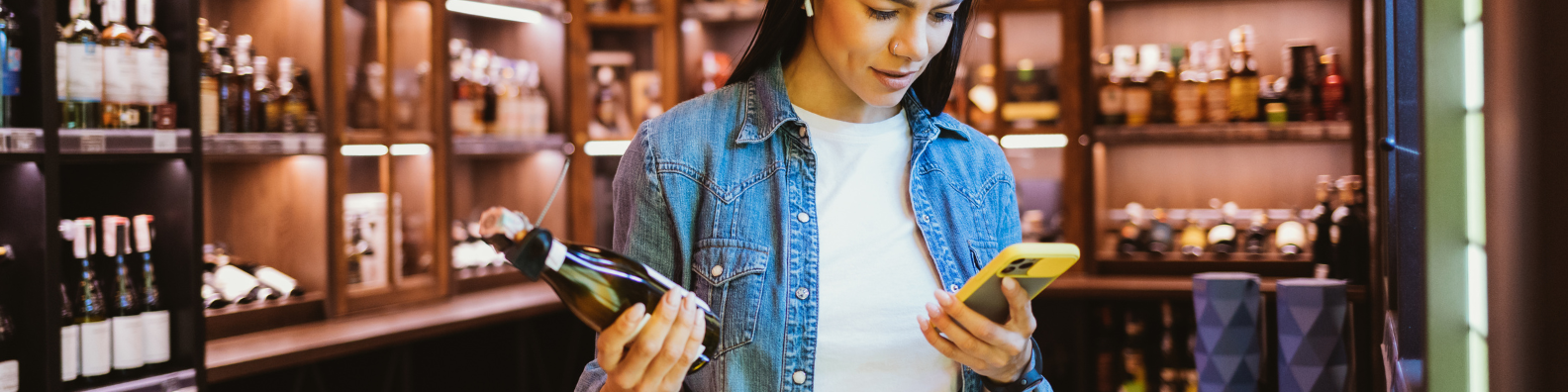
Watch someone scan a shelf, phone in hand, looking for a quick answer instead of a lecture. You know exactly why this matters. Why make it more complicated than it needs to be? Here's what works:
Start with the feeling, not the facts. Describe that Chardonnay in a way that matches how you want people to feel when they drink it. Comforted, refreshed, relaxed, or just happy to pour another glass. Instead of saying, "Our Chardonnay undergoes partial malolactic fermentation," try "Chardonnay that's smooth, gentle, and easy to love."
Use the "Will I like this?" test. Every description should answer the only question that matters: Will this person enjoy drinking this wine? Not whether they'll appreciate your winemaking skills.
Connect to real moments. Instead of: "Complex notes with a long finish," Try: "Perfect for Friday night Netflix binge."
The goal isn't to sound dumb. It's to sound human.
Why This Actually Works
When someone takes home a bottle and it lines up with what you promised, you've earned a little trust. Do it again, and now you're their go-to bottle. This is how real brand loyalty happens. Not from the slickest ad campaign, but from consistently delivering what you say you will.
There's a technical upside, too. Google loves the same plain language your customers do. People search for "smooth red wine for tacos" or "white wine that isn't too sweet."
Nobody's typing "medium-bodied wine with pronounced minerality." It still surprises me how many wineries write for their competitors or sales teams instead of their actual buyers.
Try This With Your Own Wine Descriptions
Right now, grab your current wine descriptions. Read them out loud. Would you say these words to a friend recommending a bottle?
If no, then rewrite them.
Another test: Hand your descriptions to someone who doesn't work in wine. Can they tell you what the wine tastes like and when they'd drink it?
The fix: For every technical term, write the human translation. For every winemaking process, write what it means for the person drinking it.
Your winemaker put their heart into that bottle. Now help people understand why they should put it in their cart.
The Bottom Line
Nobody's coming to your tasting notes for a master class in winemaking. They just want to know if they'll like what's in the glass. The job isn't to prove how much you know. It's to make picking a bottle feel easy, maybe even a little fun.
When your description helps someone picture when or why they'd drink your wine, you're already ahead. That's what actually moves bottles off the shelf.
The Wine Marketing Strategy in the Post-Brain Rot Era: What’s Next?
Wine marketing strategy still stuck in 2018? Consumers want real connection, not more content. Here’s how brands can shift from algorithm-chasing to authentic engagement post-brain rot era.
A few years ago, I was running a wine-tasting event at a small vineyard in Napa. The winemaker was mid-story, explaining how the soil composition gave their Pinot its signature flavors, when I noticed something: Half the guests weren’t even looking at him—they were filming, posting, checking notifications. Consuming, but not really engaging.
They were more excited about sharing his words than actually listening, snapping photos and captioning posts instead of savoring the story behind the wine in their glass.
It was a moment that stuck with me—how easily a meaningful experience could be flattened into just another post with this old way of thinking about wine marketing strategy…
At the time, it felt like the natural progression of digital culture: document, share, repeat. But looking back, I realize that moment was an early warning sign. People weren’t just sharing their experiences; they were outsourcing them. The joy of discovering a wine’s unique profile was being traded for the validation of a well-timed post.
Fast forward to today, and the landscape looks different.
People aren’t just burnt out from social media; they’re craving depth, real conversations, and the kind of experiences you can’t capture in a 15-second video.
Brand expert Eugene Wei calls this the post-brain rot era—a moment when consumers are moving away from dopamine-chasing digital trends and back to meaningful, in-person interactions.
And I feel it too. The desire to be IRL again.
If you’ve followed me for a while, you may have noticed: I don’t post as much anymore. Not because I don’t love talking about marketing, but because I’m bored of content for content’s sake.
And I’m not alone.
The Old Wine Marketing Strategy is Falling Behind
The last several years of similar stories during the “State of the Wine Industry” webinars have told us this.
While other industries—especially food and beverage—are making the shift toward deeper engagement, wineries are still stuck in the old way of doing things.
Liquid Death built a $700M brand by completely ignoring the social media playbook (that worked in the past) and focusing on building a cult-like fan base instead of mass appeal. Chipotle moved away from polished, agency-produced content and started showing behind-the-scenes moments, employee-led stories, and real interactions.
Both brands figured out what so many in wine still haven’t: marketing isn’t about content volume; it’s about connection.
Yet, wineries are still trying to compete in an oversaturated market by playing a game that’s already outdated.
The solution isn’t more content—it’s better experiences. I have said this for years— “Wine is meant to be SOCIAL.”
How Wine Brands Can Shift in the Post-Brain Rot Era
Consumers aren’t just burnt out from social media—they’re actively seeking real-life experiences over endless scrolling. They want to taste, touch, and connect, not just double-tap. Wineries that recognize this shift have a massive opportunity: instead of chasing content for content’s sake, they can create in-person moments that people actually want to share.
This means shifting from social-first marketing to experience-first marketing. Instead of relying on influencers to stage photos, host intimate, story-driven tastings that make visitors want to tell their friends. Instead of posting static content, create live, interactive events that bring the brand to life—whether that’s vineyard dinners, behind-the-scenes blending sessions, or surprise pop-ups.
The brands that thrive in the post-brain rot era won’t be the ones shouting the loudest on social media. They’ll be the ones giving people something worth talking about in real life.
1. Stop Treating Social Media Like a Billboard
If your social media strategy is just a glorified ad campaign, you’re doing it wrong. Consumers don’t want to be talked at—they want to feel part of something.
Feature real customers, not just polished brand shots. Ask questions that actually invite conversation. Shift the focus from How do we sell more wine? to How do we create a space where people love talking about wine?
Because if your social media presence disappeared tomorrow, would anyone actually miss it?
2. Make Your Vineyard (or Tasting Room) an Experience, Not Just a Photo Op
Consumers are leaning into real experiences—so give them one. Instead of manufacturing Instagrammable moments, create events and spaces that people naturally want to share.
Host intimate tastings that feel personal, not mass-produced. Collaborate with chefs, musicians, or artists to make your space an actual cultural hub. Make your winery a place for connection, not just a backdrop for staged photos.
If people only visit your winery for the aesthetic, you’ve already lost them.
3. Tell Stories That Actually Matter
Most wine brands talk about terroir like it’s a bullet point on a tasting sheet. But people don’t remember facts—they remember stories.
Why this vineyard? What’s special about the land? What challenges have you faced as a winemaker? What’s the human story behind each bottle?
The best brands aren’t just selling a product; they’re making people care.
4. Partner with People Who Actually Love Wine
The influencer bubble hasn’t burst—it’s just evolved. The days of paying random lifestyle influencers to hold a glass of rosé are over. Consumers want to hear from people who actually know and love wine.
Work with sommeliers, chefs, and educators—people who bring value, not just vibes. Choose partners who would recommend your wine even if you weren’t paying them. Ditch the generic #sponcon playbook and opt for real, thoughtful collaborations.
Influence isn’t about who has the biggest following; it’s about who people actually trust.
5. Transparency Is the New Luxury in Wine Marketing
Consumers are asking harder questions. They want to know where their wine comes from, how it’s made, and whether sustainability claims hold up. A strong wine marketing strategy isn’t just about storytelling—it’s about backing up your message with real transparency.
If you’re still relying on vague marketing buzzwords, you’re already behind. Show your process—don’t just tell. Be upfront about sustainability efforts—what you’re doing and what you’re working on. If you make claims about ethical production, back them up with real proof.
Consumers don’t expect perfection, but they do expect honesty. A successful wine marketing strategy builds trust by making transparency a core part of the brand, not just a marketing tactic.
The Future of Wine Marketing: Connection > Content
The old way of social media marketing—content for content’s sake, influencer fluff, constant promotion—is dying.
Consumers are over it. I’m over it.
The brands that will thrive now? The ones that understand that marketing isn’t about volume—it’s about value.
Wine isn’t just a product—it’s an experience. And that’s something worth raising a glass to.
👉 Go into your last five social media posts and engage with real people in the comments. Not just liking or dropping generic responses, but actually starting a conversation.
Ask a follow-up question.
Respond like a human, not a brand.
DM a top commenter and invite them to something exclusive—like an upcoming event or wine club perk.
The easiest way to stand out right now? Be one of the few brands actually talking with people instead of broadcasting at them.
Top California Vineyards on Instagram, by Hashtags
For wine lovers, Instagram hashtags are the perfect place to discover new wineries, taste new wines and learn about the latest trends in the wine industry. More than just pretty pictures, the social network has become the go-to place to follow your favorite wineries and vineyards on Instagram.
With more than 35 million Instagram posts tagged with #wine, it can be hard to find the best vineyards or wineries to connect with on Instagram. Thankfully a travel website has done the work for you by putting together a list of the top 10 vineyards to follow on Instagram. Note, this list is different than the one I created called the Top Wineries in California on Instagram (which, I am noticing is a poorly written headline).
This morning I received a Press Release for a recent study by The Thinking Traveller—a travel website specializing in booking villas in Europe—that revealed a list of the 15 most Instagrammable vineyards in the world. They chose the 15 based on the amount of hashtags that were used from guests visiting the winery or vineyards. Normally I don’t open emails like this, but this one made me smile.
I was happy to see that 4 out of the top 10 hashtag-worthy wineries in the world were in California wine country (Napa, Sonoma, and Temecula).
Top California Vineyards on Instagram
#1 - Castello di Amorosa - Napa
This thirteenth-century vineyard located in the sunny Napa Valley offers a diverse range of hand-crafted wines.
Number of posts on Instagram: 83,873
Hashtag: #castellodiamorosa
#2 - Domaine Carneros - Napa
A pristine vineyard that is tended to with the detailed care and attention only smaller producers can offer.
Number of posts on Instagram: 43,950
Hashtag: #domainecarneros
#5 - Wilson Creek Winery - Temecula
This winery is a jack of all trades, hosting overnight guests, weddings, events and walk-in tastings.
Number of posts on Instagram: 35,680
Hashtag: #wilsoncreekwinery
#10 - Scribe Winery - Sonoma
With a focus on cultivating a healthy link between man and nature, Scribe produces incredible blends and unique varieties.
Number of posts on Instagram: 11,321
Hashtag: #scribewinery
Because I love data, instantly I was curious their criteria. This "study" was from a website that focuses on booking villas in Italy, Greece and Spain so I was naturally hesitant when I saw the PR email in my inbox…
The study according to their website:
"We started with a seed list of 100 vineyards from the World’s Best Vineyards (which is according to their website), before searching for them on Instagram and recording the number of hashtags attributed to each. If the search results for a specific hashtag primarily brought up photos of wine bottles, or other random images rather than photos of the vineyard itself, said vineyard was removed from our list.
Once we’d compiled our initial list, we searched for hashtags that included both the terms [vineyard name]+vineyard and vineyard+[vineyard name], recording the number of hashtags attributed to each."
Vanity Lists Can be Fun
Okay. So this list was based on users who tag the vineyards or the wineries themselves, not just people who share bottles of Kendall Jackson on their Instagram pages. Okay...
I am still hesitant about this method because (for example) there are several hashtags people use when visiting Iron Horse Vineyards. Visitors use the hashtag #IronHorse #IronHorseVineyards #IronHorseWine, etc. so this study is definitely one that is kinda silly.
That being said, I like silly. And I am all for more people visiting wineries in California, and sharing pictures and videos on Instagram.
Speaking of hashtags on Instagram… bah
My two cents here: https://www.instagram.com/p/CbQgfNCPkY2/ (The importance of hashtags has changed more times than I can count.
But, if this app is trying to be compete with that other video app, we may see a larger emphasis on a more granular search option (keywords & sentences vs hashtags) and reach within specific communities.
This means hashtags won’t matter as much as creating content & engaging with people within your niche.)
Finding Trending Audio on Instagram Reels
Being able to find and use trending audio on Instagram Reels has become a big part of both Instagram Reels and TikTok. Trending audio (both trending songs & original audio that creators make) can help even small accounts grow their Instagram accounts. Here are tips on how to find trending audio on Instagram Reels to use for your social media marketing efforts.
Being able to find and use trending audio on Instagram Reels has become a big part of both Instagram Reels and TikTok. Trending audio (both trending songs & original audio that creators make) can help even small accounts grow their Instagram accounts. That is, as long as creators have fun with making each trending audio make sense for their niche vs jumping on a trend that doesn’t make sense (see the end of this post or details on what I mean).
How to Find Trending Audio on Instagram
Search your favorite hashtags (make it relate to your products/service, location, or who your target audience is) and click Reels. here you will see some of the most viewed videos from this hashtag. (hopefully soon, Instagram will make their search feature more robust so you can search based on the top videos within the last week, but for now, this gives you an overview of the content that has worked in your niche. Find audio that you like and save it to use later).
The other way to find trending audio on Instagram is to literally just scroll! Click on the Reels tab on the bottom middle of your account and swipe up. If you see a small arrow going up and to the right that means the audio is currently “trending.” You can save the audio to come back to later, or create a video right away.
*but*
Do you ever find audio that you want to make sure to use for your Instagram account then later try to go back and find it but cannot?!? *OR* you find it but you forgot what you wanted to use it for?!
a few tricks to remember to Use trending audio on Instagram Reels:
On the audio’s homepage click the three dots in the right top corner. Save the link and go to a Google Doc or Note on your phone that you titled “Content Idea Brain Dump” also add a sentence for how it would work for your brand.
Save space on your calendar for content creation only time - then go into this braindump document and add your caption.
Later shoot the video, add text to the screen and add your caption. Save it to your phone.
If you are here with the question “Why can’t I save audio on Instagram Reels?” I have some tips for you as well!
If you have a Business Page (because duh, you are a business) you may not have access to be able to use to save any audio on Instagram Reels.
Well, I have a workaround for you!
Go into your settings and change your business Instagram page to a Creator Page (go into settings, account, and switch account), this way you can still have access to business tools like ads and analytics - but you would be able to create lipsyncing style Instagram Reels for your brand! This workaround also seems to work if you switch your Business Page category to “Entrepreneur” under your Edit Profile settings on your Instagram home page.
If you need a step by step guide on switching your account: https://help.instagram.com/529483457260403
This edit has helped me, and my clients get access to trending audio on Instagram so
One thing I want to note is that focusing on trending audio alone may grow your following on Instagram (playing with the algorithm), but it’s not a great marketing strategy for long-term connections with your target audience. Creating content that is educational, entertaining, and inspirational, AND uniquely you is the key - and I am not saying that is easy. But, I will say that building confidence can help.
Here are more resources on how to use Instagram Reels for your business:
10 Ideas for Wine Marketers to Use Instagram Reels (yes this works for other niches as well).
Non-music ideas for Instagram Reels (for those worried about copywriter issues).
Building confidence with creating Social Media Videos in general (Instagram Reels & TikTok Videos).
And remember, if you are still having trouble, connect with me for a one on one strategy session or sign up to be first to know more about a future class I will be teaching on the subject. Or, connect with me on Instagram, I share a lot of content with simple hacks and tips for Instagram Marketing! @sharayray.
My Favorite Non-Music Instagram Reels Ideas For Hospitality & Wine Marketers
For marketers that have business accounts without access to good music (yes, royalty-free music is there, but tbh it is pretty meh) there are two things you can do when it comes to creating Instagram Reels for wine social media marketers.
I know, I know… I talk a lot about Instagram Reels lately. And there is a reason. A. After dealing with cancer treatments last year, I am just now jumping on the bandwagon now that I am feeling better. B. Instagram Reels are one of the best ways to engage with your community AND reach a wider audience. I will say from experience, my Instagram Reels get comments weeks later, and my other posts have a shelf life of about 1 to 2 days. I don’t know about you, but I would much rather create content that people are seeing 2 weeks later!
So, Instagram Reels is a great way to engage with current fans and connect with new ones. So, I will keep encouraging people to share them (that, and video is one of the best ways to showcase your brand story on social media). I recently wrote a blog post about some trending Instagram Reel songs that I would love to see shared by my friends in the wine marketing instrusty. Read the full blog post here: 10 Ideas For Instagram Reels For Wine Businesses.
But, what if you don’t have music on your Instagram account?!?
For marketers that have business accounts without access to good music (yes, royalty-free music is there, but tbh it is pretty meh) there are two things you can do when it comes to creating Instagram Reels.
1 - Save Original Music to Use Later in Instagram Reels
When you find a sound or song you like, you can save it and come back to it later. Here is a step-by-step guide on how to save Instagram Reels music. Note, this only works for original music shared by users vs. the song from the musical artist themselves.
2 - Simply Talk in your Instagram Reel
The second option is to simply talk to the camera, or record a voiceover after you film your video footage. If you have hit a creative roadblock for ideas to talk about in your Instagram Reel, you have come to the right place!
My Favorite Non-Music Instagram Reels Ideas For Hospitality Marketers:
Introduce yourself, and members of your team. Start the 15/30 second video with one thing about you, or what your favorite food or wine (what your fave product) that your brand sells. Keep things short and talk straight to the camera. Then edit to be less than 30 seconds. Add text to the Instagram Reel if you want, or use the Instagram caption feature to add text (just a reminder - not everyone looks through Instagram with the sound on, so the text is always helpful).
Look at your website analytics. Showcase your best-selling products, or think about how you can repurpose your most viewed blog post (mine is all about Linktree and how I think there are better ways to utilize your Instagram link in bio) to create a short Instagram Reel.
New products or promotions. Simply tell people about the latest product or service you have coming up. And in the caption and text of your Instagram Reel be VERY clear on how they can purchase with a clear CTA (call to action) that inspires them to take action.
Create a how-to video. Think about your brand passions or products and create a how-to video on recipes or things your customers may need to know to use your product. Think about “how to properly open a bottle of wine,” or “how to create the best cheese plate to pair with our Zinfandel,” or even “how to age wine.” Think about questions you have received from customers and try to answer them in short, straight to the point how-to videos.
Take people behind-the-scenes. Take your community behind the scenes of the tasting room, kitchen, spa, wine cellar, bottling room, or vineyards. What do customers get the most excited about when you are taking them on a real life tour? Start there and create a short behind the scenes video.
I hope these Instagram reels ideas can help your creative juices flowing, because even with each of these ideas - there is a lot of content to be created! Don’t just create ONE product reel, find new ways to have fun and show off the goods (even if you only have one product like we do over at Randall the Blue Spider’s instagram page).
Why Instagram DMs Are the Key to Social Media Engagement
Connecting with customers (and potential customers) through Instagram DMs does mean you have to dedicate time to engage on social media. If you are a social media marketer, try to carve out time to focus specifically on engaging with your online audience.
I spend a lot of time focusing on engagement on Instagram. In fact, my social media marketing mantra for the last 12 years has been that social media is about being social with your community first, marketing a product or your service second.
In every class, speaking engagement, and most blog posts, I talk about how being social and connecting with your audience is more important than a pretty picture on any social network—even Instagram, which focuses on imagery and video. (Quick note: Pinterest is NOT a social network, even though some people connect on the platform; it is first and foremost a visual search engine).
Think about this: It doesn’t matter how many followers you have on Instagram if they are not engaged (i.e., commenting, clicking, purchasing).
Right now, I find myself engaging more with people via Instagram DMs and Instagram stories than on the feed.
Does this resonate with you, too?
Don’t get me wrong, I am still a big fan of the Instagram feed. It just feels easier to share content through Instagram Stories. There’s less pressure; it doesn’t have to fit my Instagram aesthetic or get lots of likes and comments for me to consider it a successful piece of content. It allows for more creativity because I don’t have to worry about the Instagram algorithm not showing my content to followers simply because I didn’t spend time connecting with people right before I posted.
Btw, this is a tactic I recommend trying out if you are posting to the feed itself: spend 5 minutes BEFORE you post commenting on posts and Instagram stories with people you follow. That instant connection makes it more likely that they will see your post when you share. Make sure to reply to every comment left on your content for the first few minutes as well.
I Digress…Back to Engaging on Instagram DMs for Brands
I have found that a lot of people also find it easier to engage on Instagram Stories, even more so than on the feed. Clicking one of six quick reactions within stories is almost as easy as clicking “like” on a standard post.
Instagram DMs are important because they are an easy way to engage one-on-one with your customers. It definitely takes more work, but you are able to create more in-depth relationships with the people who will potentially buy your product. And that is always worth the effort when it comes to your social media marketing tactics. Relationships with customers are what create brand advocates: people who want to share the love for your brand with their friends and family!
Action Items for Engaging in Instagram Stories/DMs:
Any time someone comments, answer them back. Even if it’s just to say thank you. Sometimes I simply say “Woooooo,” or comment back with an emoji or a wine glass. And yes, I recommend everyone also respond to those who leave a quick reaction emoji. It’s a great way to start a conversion.
Make sure to double-check your secret DMs from potential customers who you don’t follow. This area of communication often goes unanswered by brands, and they are missing out on connections with people (speaking from experience, it also leaves a bad taste in a customer’s mouth when a question goes unanswered).
Don’t automatically DM someone if they follow you, unless you want to compliment them on something on their feed. This is not the time to make a sale or even start the sale process. I stopped following people on Twitter because I was getting so much new follower spam through private messages, and I just couldn’t deal with it anymore. It comes across as spammy versus smart.
Keep the conversation going through direct messages. If a customer is asking questions under a post and you want to have a longer conversation, tell them to DM you so you can get information to them.
Create Instagram Stories that ask questions and encourage people to connect with you. One Instagram hack I love is asking questions about controversial food/wine subjects (e.g., who loves cilantro?!?!?). Everyone loves providing their own opinions and it’s a great way to start a conversion.
Ultizie the Instagram Story stickers to create those questions with polls, questions, quizzes, countdowns (to big promotions or events you are hosting), or slide bar. These are fun ways that encourage Instagram users to engage.
Spend some time looking at your community’s own Instagram stories. Leave comments of your own. Make it relate to the content. And be personable.
Connecting with customers (and potential customers) through Instagram DMs does mean you have to dedicate time to engage on social media. If you are a social media marketer, try to carve out time to focus specifically on engaging with your online audience. Here are some of my favorite tips to engage with your community. My personal favorite has always been to get a kitchen timer so you don’t go down a rabbit hole of looking at Instagram reels from celebrities for long periods of time. (You and I have both done this…)
Here are some other ways to create daily social media habits! Enjoy!
And last… here’s a quick tip for find in new people in your target audience to connect with:
Search for influential people in your target audience and see who comments/engages with their content.
Connect with them (follow and comment on a post or two).
Keep it up (Save an Instagram post of theirs so you can come back and connect later).