One year Since my Last Day of Anal Cancer Treatments
One year ago I rang the bell at the Kaiser cancer treatment center. One year ago I finished my anal cancer treatments - radiation & oral chemotherapy. And now, one-year post anal cancer treatments —Moving forward, one of my goals in life is to encourage everyone to listen to their body, and go see a doctor, community health center, etc when they feel like something is off.
One year ago I was in the worst pain of my life.
One year ago was my final day of radiation/oral chemotherapy anal cancer treatments (read more).
One year ago, I thought it would be back to “normal” in a few weeks.
Yesterday, a journalist for ACB 7 News interviewed me (and Ryeson about the Randall the Blue Spider Goes Surfing book) and commented that I was so happy & smiling even though I have gone through hell and back over the last year +.
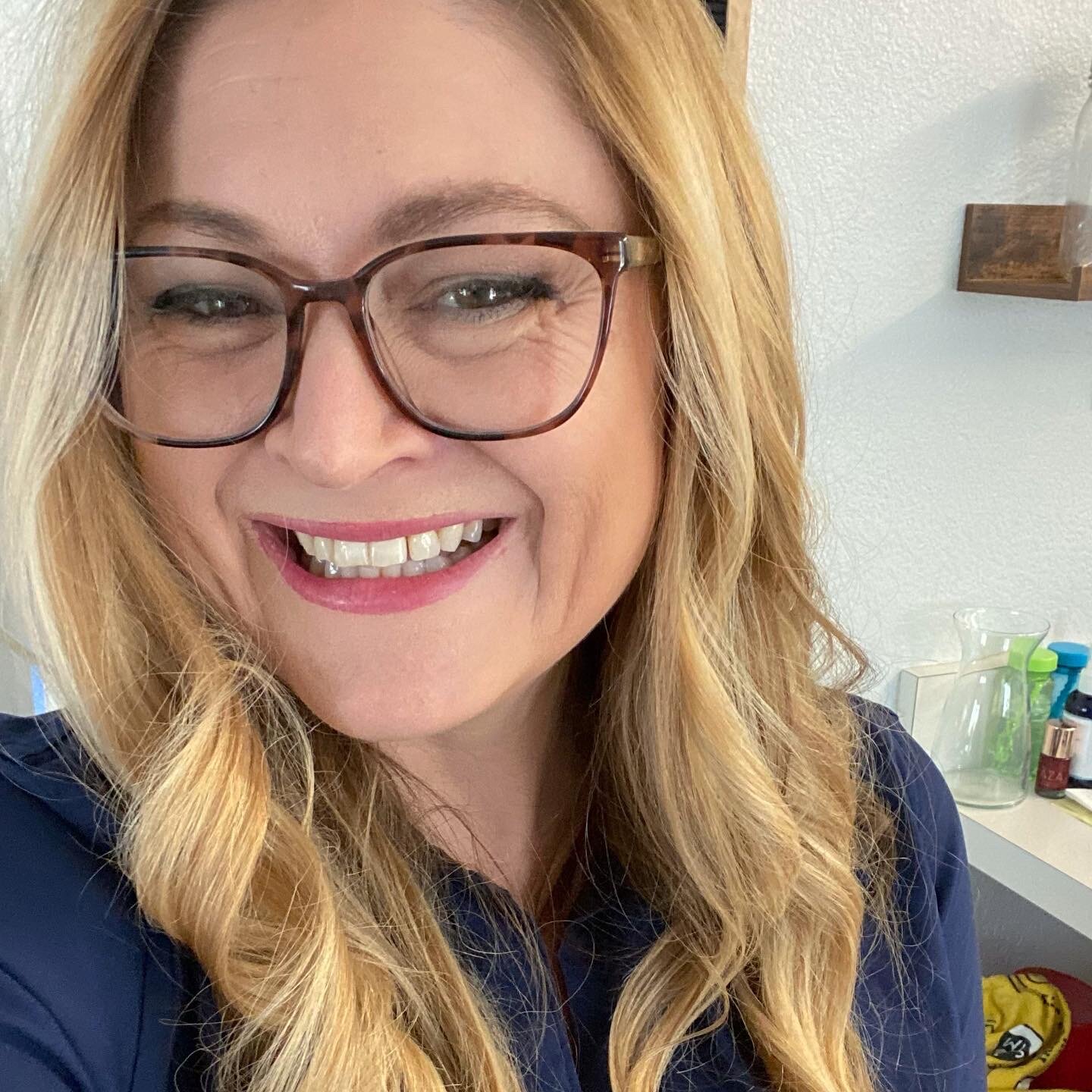
My response to her: Moving forward, one of my goals in life is to encourage everyone to listen to their body, and go see a doctor, community health center, etc when they feel like something is off.
I have to smile because if I don’t, I’ll tear up. 🥰🥺
Even though the worst pain of my life was a year ago, there are definitely mental health issues, physical therapy, and some brain fog that may impact me for years to come —
But.
I understand the importance of health more than ever. I also have a 2nd children’s book on the way (yay) and a relatively healthy family that I am going to spend a lifetime advocating for.
I wanted to spend today celebrating with friends and family. But instead, I’m gonna go make a protein shake and try not to tear up. 💙🤞


Bottoms Up! Post-Anal Cancer Life One Year Later
The post-cancer journey is a slow and arduous one. It's hard knowing that I may not return to my pre-cancer "normal" in some ways. But all you or I can do is approach every day in turn—and with diligence, focus, and people by your side, things become a little less tough than they otherwise would be. Sometimes, that's all you need.
It’s been just over one year since I found out I had a tumor living in my pelvis. One year since hearing those dreaded words from the doctor: “You have cancer.”
One year since the whirlwind of doctors appointments, tests, scans, and starting cancer treatments—30 days of radiation, daily oral chemotherapy pills, and two transfusions of chemo.
It may be one year since I found out I had cancer, but it’s been 10 1/2 months since the last day of my cancer treatments, the most painful month of my entire life, and the slow recovery of getting my mobility and brain back.
Post for Anal Cancer Treatments
It is hard to prepare anyone for going through cancer treatments because cancer is so different for everyone who has it. But there were a few things that I knew going in, and a few things that took me by surprise. I have written about the many things I learned during my anal cancer treatments; I had heard that the first two weeks after treatment would be the hardest, but nothing could have prepared me for how I would actually feel when the time came.
I really thought that, after a month, I would have been moving around more. It took closer to three months— to simply be able to walk around the block and that was after a focused effort to eat healthy (for energy) and slow movement every day.
Even now, one year later, I have to stretch and do mobility exercises daily. I have to eat healthy and move around because my digestive system is not what it used to be.
I even took a class at my local gym and couldn’t keep up with women who were 30 years older than me.
The brain fog lifted after a few months, but when I talk, it’s sometimes harder for words to come to me. (This doesn’t happen when I write, only when I speak.)
And post-cancer menopause is definitely no joke. The term “hot flash” is exactly what you think it would be: this internal heat takes over every part of your body for a minute or so, and then it goes away as quickly as it came. I can be in the middle of talking and need to walk away to find a cool spot or lie down.
I’m pretty sure there are other side effects, but I honestly can’t tell what stems from post-cancer life versus menopause versus random anxiety about raising a family in the COVID pandemic.
Immune System Support Post Cancer
I sometimes have to remind myself that while my focus is on being healthy and happy with my family, that doesn’t mean that those things are always easy to obtain. I am still going to crave chocolate or have too many beers (which now unfortunately means that I literally can only have two beers without being hungover. Two and a half, and the next day I feel like absolute crap).

Image of a tweet from @ilanamuhlsteinrd
This also goes for anything sugary. I’m mourning the fact that I can’t eat sugar like I used to. But, my brain knows that that’s a good thing because sugar is not good for anyone. I am still sad about it because as bad as sugar is, it tastes even better…
I’m now at the point where having even a little bit of cake means that I crave it for the next few days and get headaches when I don’t consume more sugar. Damn sugar hangovers are almost worse than alcohol hangovers.
Jumping Back into Everyday Life Post Cancer
I’ve written a few articles about my post-cancer life on this website, Cancer Wellness Magazine and the East Bay Express, and even talked about it on TV on Good Day Sacramento, along with a few podcasts. Having to step back from my work meant that I was able to publish Randall the Blue Spider Goes Surfing, and watch it go to a #1 Best Seller on Amazon -- and that wouldn’t have happened if it weren’t for being forced to say goodbye to clients and gigs because of cancer and the coronavirus.
I am truly grateful for that opportunity, and for the chance to ascertain what’s really important in my life.
I found out the tumor was gone one week before the children’s book came out. That is now three months of not dreading the possibility that the cancer treatments hadn’t worked and I would have to have surgery to take the tumor out. I still worry on a daily basis, especially because the coronavirus hasn’t gone away.
I’m also having trouble trying to figure out how to talk to people about my cancer.
Because we’ve been in lockdown for the past year and a half, I’m just now learning to talk about my cancer with strangers. I have this visceral urge to tell everyone. I want to explain why it sometimes takes me a bit to get from one place to another, or why I started crying in the middle of an exercise class (hot flashes).
Regardless, I am a year out from hearing the life-altering words “you have cancer,” and I am making sure to talk about it, to normalize discussion of anal cancer, to advocate for listening to your own body (even if test results are telling a different story, push your doctors if you feel something is off).
The post cancer journey is a slow and arduous one. It's hard knowing that I may not return to my pre-cancer "normal" in some ways. But all you or I can do is approach every day in turn—and with diligence, focus, and people by your side, things become a little less tough than they otherwise would be. Sometimes, that's all you need.

Tips I Learned During Anal Cancer Treatment
I will say that no matter how horrible the days were, they went by quickly, and there is a light at the end of this tunnel. My type of stage III anal cancer has a good chance of recovery—even if that recovery means that I still have to have surgery in the future.
As you might have seen when I announced that I had anal cancer back in July, I've been very vocal about what treatment looked like and what post-cancer life looks like for me.
I have shared my story on social media as well, and with that I have received many messages from people I know, telling me my advice has been helpful. I have also talked with people I didn't know who were reaching out to ask for tips during cancer treatments because they or someone they loved was going to go through anal cancer treatment—and they just wanted to talk. I have even had a woman reach out because, apparently, my blog now comes up pretty high under the search term “anal cancer treatment.” So who am I to deny this underutilized SEO term? (lol)
Finding Out You Have Anal Cancer Is Scary
Especially when your doctors start telling you what treatment looks like —- radiation, chemo, dilators, creams, medicine, etc. (read more about how I found out I had anal cancer). It was a whirlwind of information, and it all happened so quickly that I didn't really have a lot of time to process what was going to happen to me during anal cancer treatments. It really wasn't until after my radiation burns on my pelvis started to heal and my energy levels started to increase (which occurred a month or two after my last day of treatment) that I could begin to internalize the fact that my life post-treatment is different.


What has helped me is being able to provide some tips I have learned over the past few months and giving advice to anyone who's willing to listen.
Anal Cancer Treatment Advice:
I have copied and pasted this advice to three different women, so I figured it would be important to share here as well. Before reading, please know that this is advice from my experience of going through intense radiation, along with less intense chemo pills for 30 days, and being bedridden.
Everyone’s treatment schedule is different, and so my best advice to you is to ask your doctors as MANY QUESTIONS AS POSSIBLE and work with them on a good plan for your needs.
The week before and three weeks after my final day of anal cancer treatments, I was bedridden because of the pain from the radiation burns. I didn't want to move at all. Thankfully, because my body was exhausted, and with the medication, I slept through most of it—aside from getting up to use the bathroom (which was the worst part of my day). That month I just drank protein shakes for sustenance because "real food" made my bowel movements even more painful.
Get a day planner or notebook to write down the TIME you take all your medications each day (you can also include times for bowel movements, what you ate, and how you felt throughout the day). At one point during the worst of it, I was taking 6 different pills every two hours. There is NO WAY I could have independently remembered all of it.
Medication makes you constipated, so figure out what makes sense for your body. I prefer not to talk about it, but I'll just say that ex-lax and stool softeners helped to balance the morphine. Don’t forgo certain medications because they make you constipated—figure a way to balance it.
Get a medication caddy (okay it’s really a shower caddy) and a label maker to add the name of each medication to the top of the pillbox - this is helpful for you when you are super “foggy” and your caretakers. Thank you Melody for this suggestion. <3
Talk to your doctor about when you should start using the dilator - everyone I have talked to seems to have heard something different from their doctors so work with them for the best treatment for you (I started 6 weeks after my last day of treatment, but some start during treatments).
Walk around as much as you can. Stretching is key! Once bedridden, you won't be able to do either, so try to get out as much as you can. Look up stretches from bed on YouTube and try doing them while bedridden (if you can—don’t push it).
And during the time you are bedridden (or at least stuck close to the bed), don’t bother with pants. I either wore a long t-shirt or really soft pajama shorts when I could. And I wore the shorts under my sweats when I had to go to doctor’s appointments because regular underwear was too tight.
Your oncology nurses/doctors will recommend different ointments for your radiation burns. Use them liberally. Flushable wet wipes are much better than scratchy tp. Invest in several packs (especially important during a pandemic when people are hoarding tp, etc).
Acupuncture is GREAT for aches, pains, and stress. Start with this treatment in conjunction with your regular cancer doctor’s visits (and see if your insurance covers part of it!).
Get a sitz bath to go over your toilet. The salt will help with the radiation burns. If it burns when you urinate, pee in it with cold water. It’s kind of like peeing in a pool, but it helps so much. Get the bath and salt here.
Work with a loved one on all aspects of life (driving to appointments, childcare, making dinners, etc.) because you will need help with a variety of things, and talking it through beforehand helps to mitigate any bumps once you start feeling really weak. My husband took care of the four-year-old, me, and himself for the month I was in bed, and it wasn’t easy—but the restaurant and grocery delivery apps definitely helped to make sure he didn’t go hungry while he was taking care of everyone else before himself.
Schedule time for others to help out. We created a calendar with friends and family to help drive me to appointments and take care of Rye/Jeff/myself, and it was so helpful to have them all. They ALL took COVID tests and quarantined before coming to see us. You will need the most help in the last week of treatments and the following month right after radiation ends.
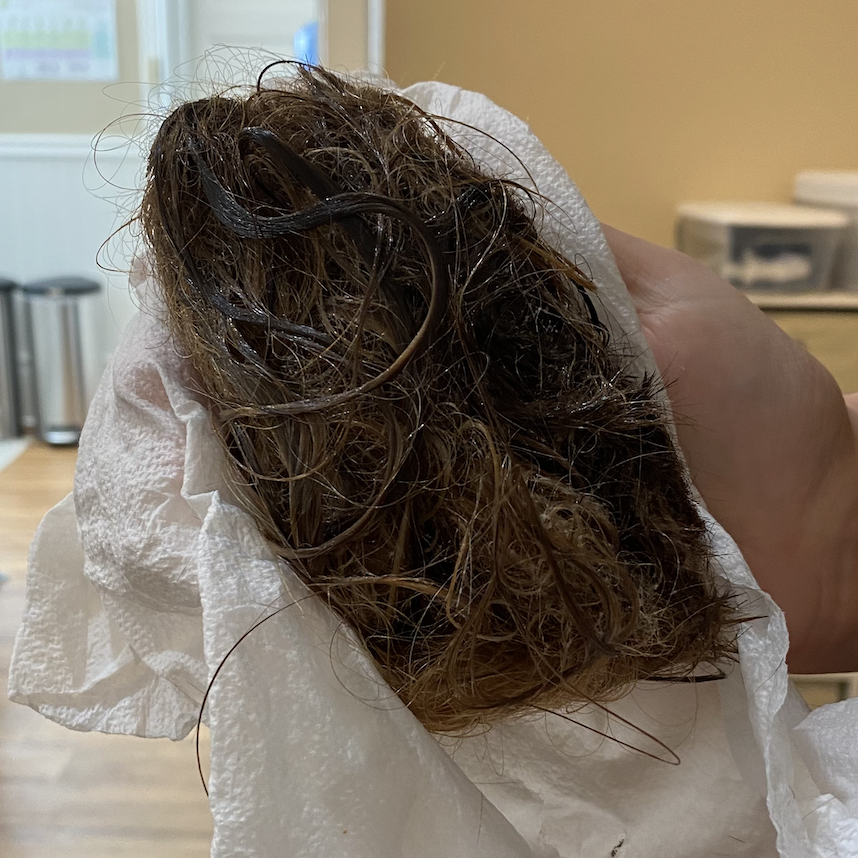
If you have long hair and are not losing it due to chemo, have someone brush your hair every day. During the worst of it, I couldn’t shower, and I could barely get up. I ended up with two very large dreadlocks, and once it was too late, I couldn't get them out on my own. I was too weak, and so I needed professional help. Thankfully the amazing team at The Beauty Spot Santa Rosa was able to comb most of it out, and they only cut out a chunk in the back of my head. I can comb some of my hair over and it looks pretty normal. This is a random piece of advice that I doubt anyone would think about beforehand.

It took about two months out of treatment to start feeling "normal” (which is a relative term in 2020, of course, because nothing feels normal). I really thought I would be back to work after two or three weeks, but my body and my mind had other plans. Talk to your employer to see if you can ease back into work life, because the brain fog and fatigue is real, but it does go away.
Get over being embarrassed about talking about symptoms, treatments, and anal cancer in general. I talked about poop more in the past few months than I did when my son was born. And I get it: it's embarrassing to admit you have anal cancer, even more so because it’s derived from having HPV. But, the more we weaken the stigma surrounding it, the more people may get their symptoms checked early (my symptoms were hemorrhoids). I also just found out that Marcia Cross (the redhead from Melrose Place and Desperate Housewives) had anal cancer back in 2017. She has done a great job of sharing her own story.

Even More Anal Cancer Treatment Advice with a Focus on Eating:
For the most part, I didn't have an appetite and nothing tasted good. It VERY much reminded me of being pregnant. Certain smells would make me hate a specific food, so I stuck with lots of oatmeal and bland stuff to keep up calories. But, like I said, protein shakes kept me going! When you are in the lowest moments, don't focus on eating SUPER HEALTHY, just make sure you are eating enough. <3
In terms of eating right during treatment and after — stick to as many veggies as you can (IF YOUR nutritionist agrees - for some heavy fiber may not be a good idea). Currently, I am low-sugar, gluten-free, and no dairy (aka NO FUN) just to boost my immune system and energy for the next several months at least. I am super focused on getting 8-10 cups of fruits and veggies a day. That gets fiber in your diet, which is helpful for digestion (and digestion is one of the most important things to focus on when dealing with a tumor in your butt).
Protein/veggie shakes made sure I was getting enough to sustain myself. My personal favorite is the Kale & Protein by Amazing Grass (subscribe & save is awesome for buying this protein shake). I lived off of my protein shakes during the time when I was bedridden and eating anything felt like a LOT of work.
Eat a tablespoon of sauerkraut every day (personally, I LOVE Wildbrine’s Red Cabbage & Red Beet Organic Sauerkraut, which you can get at Whole Foods, or the Raw Green Organic Sauerkraut, which you can get a HUGE tub of at Costco or a small tub at Whole Foods). It is great for your GUT (and, in turn, is great for feeling better). Try eating more fermented foods in general. Even fermented pickle spears.
When it comes to health after your cancer treatments, think about the things that keep you healthy in general: eat your veggies and move around. Please know, however, that this is not me saying, “EAT KALE AND IT WILL CURE CANCER.” Eating healthily made me feel more like me. What you consume is about listening to your body. The other day, I had two pieces of cheese pizza, and my stomach, my sleep, and my bowel movements HATED me after. (But, it was delicious and worth it.)
Please remind yourself that it will take a while to find a groove again, and even longer to start feeling like “yourself.” For me, three months out, I can say I am almost there. Now I just need my tumor to fully go away (we won’t find out officially until about March 2021), and I can move on to the anal cancer remission stage.
These are just some of the tips I have provided in the last few months. It's definitely not everything. Communication with your doctor and friends is key.
I will say that no matter how horrible the days were, they went by quickly, and there is a light at the end of this tunnel. My type of stage III anal cancer has a good chance of recovery—even if that recovery means that I still have to have surgery in the future.
Hug your loved ones. Make sure to connect with your doctors and cancer nurses as much as possible - there is NO SUCH THING AS AN EMBARRASSING QUESTION!
And if you want to talk more about what to expect during anal cancer treatments, please know that I am here. @sharayray on Instagram or email me at shana@shanabull.com <3
Next Steps Post Anal Cancer Treatments
As I move forward with anal cancer treatments, I wanted to answer are some questions I get the most
The 3 questions I have received the most when it comes to my cancer treatments are:
How are you feeling?
When do you find out if the tumor is gone?
What are your next steps?
1. I’m definitely feeling better than I was a few weeks ago, but I’m not gonna lie — I really thought I would be back to feeling “normal” after almost 8 weeks post-treatment. I have a few radiation burns that are still lingering, and my energy levels are just not there.
The muscles in my body hurt. I went from not moving around at all to small walks & talking to people, and it definitely took a toll on my body. So I’m just trying to take things slow with small goals to get moving everyday.
2. My first CT scan post treatment was yesterday and I haven’t heard back yet. But tumors can up to 6 months to go away. I’ll definitely keep everybody updated when I know more. But for now I don’t know anything other than the fact that I can’t physically feel it anymore, and before I could feel it in my pelvis.
3. Next steps are focusing on my immune system as much as possible with as much healthy food and movement as possible. I am learning more about a potential clinical trial & immunotherapy that I could be part of, and I have a few appointments for acupuncture and massage (now that they are open again). I’m weighing all my options, and right now I’m working with my doctors, to figure out what the best next steps are for me.
Thank you everyone.

2020 Is a Literal Pain in My Ass — Finding Out I Have Cancer During a Pandemic Was Not Part of the Plan.
Out of all the places to get cancer, it’s definitely not the most flattering. Speaking up and normalizing things (like talking about anal cancer) can hopefully inspire people to be more proactive in going to see the doctor when they have symptoms so they can get treatment.
Finding out you have cancer is something I hope no one reading this will ever have to deal with.
Finding out that you have cancer during the middle of a pandemic… well, that is a once in a lifetime crappy hand of cards.
I’ll start off by saying that my doctors have told me the majority of people with my type of cancer recover with treatment. Specifically, my chemo oncologist said that he has NEVER had a patient not respond well to the type of treatment they’re doing for me.
I just wanted to share that right away before I go into details.
As I said, 2020 is a literal pain my butt: I have stage III anal cancer.
Squamous cell carcinoma. It is a type of skin cancer that developed on the inner layer of my anus. It is derived from having HPV in my early 20s, which is apparently very common (for anyone who doesn’t know much about HPV, about 80% of college kids used to get it, and now there is a vaccine for it). Granted, my type of cancer is not that common.
For anyone who wants to understand the technical side of cancer, it’s T4 N2; the T refers to the size and extent of the main tumor, 4 being the highest. The N refers to the number of nearby lymph nodes that have cancer (my cancer spread to two small lymph nodes near the main tumor).
Cancer has not spread far, so that is really good. But the size of the tumor (the size of an egg) makes it a Stage III. My doctors have said over and over again that I have a type of cancer that responds really well to treatment (for most people), which I just want to reiterate in this blog post—both for myself, and everyone reading.
Treatment for anal cancer involves chemo and radiation—but I am not going to lose my hair.
I learned more about my treatment on a video chat with my new oncology doctor while camping. As soon as she told me the chemo I’m getting doesn’t cause hair loss, my entire body collectively took a sigh of relief. I started bawling. Whether you think worrying about losing all of your hair to chemo is vain or not, it was a sense of relief.
Loren Hansen took these photos with my family the day before I found out details about my treatment - when I thought chemo meant I would be losing my hair - so I could get one last photoshoot before I lost my hair (and before I started to feel sick).

The relief came from my thought that keeping my hair indicates that the treatment isn’t as invasive as it could be; and this makes me feel like I can handle going through the next few months. (Also, I had shorter hair when I was 21 due to a highlighting accident that burned off some of my hair, and I don’t look good as a short-haired person. Many people can pull it off beautifully, but not me.)
Treatment: Six weeks, Monday through Friday of 15-minute radiation treatments, combined with a chemo pill—meaning that my August and September are going to involve a lot of rest, a lot of doctor appointments, and probably a lot of tears.
Also, 6+ weeks of no wine, though they did say that a sip or two here and there is okay. ❤️
My job for the duration of my treatment is to make sure I am as healthy as possible and keeping my immune system working by eating really good food, drinking lots of water, keeping my stress down (through acupuncture and oncology massage), and moderately exercising.
My symptoms will be progressive with treatments, so during the first few weeks, I may be a little bit sleepy but still able to work here and there (just a bit, nothing overwhelming), help watch Ryeson (kinda), etc. But typical symptoms like nausea, tiredness, and pain will increase the more treatments I get.
I am a planner at heart—even when it comes to my anal cancer
Over the next few weeks we have friends and family coming to help out (with both me and Ryeson - though he is back in preschool during the weekdays). They are taking COVID tests before they come to see us because I am now officially immunocompromised (Ryeson always has been because of his cystic fibrosis.)

I have spent the last week creating calendars, spreadsheets, Google Docs on the specifics, and I even found a cancer-oriented day planner that I was excited to find on Amazon. I will be able to keep track of appointments, medication, how I am feeling, but also be able to write down things I am grateful for - to find some happiness in some pretty crappy days.
I don’t know what life is going to look like after my treatment, but I am very optimistic. ❤️
I’m already making some plans for what my business is going to look like post-treatments, and also for after this wave of COVID dissipates. I’m definitely not rushing out to eat at a restaurant or taste wine at a winery, but I do miss seeing everyone in person.
Someday we will get back to that.

Why I chose to let everyone know about my anal cancer:
I wrestled with it for a little bit because it’s embarrassing—out of all the places to get cancer, it’s definitely not the most flattering. Originally I didn’t want to tell anyone, but I also know that speaking up and normalizing things (like talking about cancer in your butt) can hopefully inspire people to be more proactive in going to see the doctor when they have symptoms like hemorrhoids and pain down there (or any type of pain really). Also, a big part of my own marketing and advice is for people to be vulnerable and open with their own customers, and I've always been a big fan of practicing what I preach.
Didn’t Farrah Fawcett die of anal cancer?
Yes, in fact, she did. While normally I would have no problem being compared to Farah Fawcett, this instance is not so fun. She ignored her symptoms for a long time, and while I feel I ignored mine for a little bit because I was too embarrassed or thought that the hemorrhoids would go away, I ended up forcing my doctors to see me during a pandemic because I knew there was something wrong. Hopefully catching it somewhat early is going to help me in the long run. Here is more on her story with anal cancer: closer-look-at-the-cancer-that-claimed-farrah-fawcett/
Talking symptoms of anal cancer:
Since we are talking about ignoring symptoms and how horrible that could be, I’ll tell you my story. This question keeps coming up, so why not start from the beginning? Just before the shelter-in-place was ordered, I had hemorrhoids. I didn't really think much of them; I also had them when Rye was born and they went away. I thought they would again.
They didn't.
And, honestly, I was embarrassed to go to the doctor right away, but eventually, I contacted Kaiser and had a series of video chats with doctors who gave me different ways of treating the hemorrhoids. I knew it was a different type of pain than what I experienced with the hemorrhoids I had after Rye was born, but I still thought that could be the issue.
It eventually hurt so much that I insisted my doctors meet me in person. In-person visits still weren’t common in early June due to the pandemic. I had to call and transfer over to a few advice nurses, but I eventually got a doctor's appointment with my new gynecologist. She quickly realized it was more than just hemorrhoids. From there I quickly had a CT scan, an MRI on my pelvis, a COVID test, a colonoscopy, a biopsy, then another CT scan on my chest, and an MRI specifically on my rectum. Once the biopsy determined that I had cancerous cells, they did a PET scan, which finally determined that I have two areas of cancer, both in my pelvis.
Telling my story about anal cancer
I know this is probably too much information. That’s me, I like to paint a pretty story... And I have a type of skin cancer that’s on the inner layers of my butt, so that’s my story.
If this blog leaves you with any takeaways, I hope it’s the necessity of learning more about your body and going to see a doctor any time something feels off. It’s better to be safe than sorry.
And please know I understand the privilege that I have with good healthcare via my husband’s job, even during a time in which I lost several clients/writing gigs due to COVID-19 hitting the hospitality industry. This is another example of why universal healthcare for the United States is so important: we ALL DESERVE to go to the doctor when we feel like something is off…not just a few of us who can afford it.
BTW, I am not shying away from talking about any of this, so if you have any questions or simply want to say hi, connect with me @sharayray. I do ask you to respect my request for everyone to not bring up any type of potential “cures” through food, prayer, etc., and please refrain from telling me about how your cousin had cancer and beat it, or something of that nature. I'm working very closely with my doctors and that's what I'm focused on, not stories about other people. Thank you.

I’ll leave this blog post with this image my friend Craig posted on my Facebook page. ❤️ The plan post-all-of-this is to come back even stronger with whatever I decide to do. It’s a new beginning.
Images were taken by Loren Hansen Photography in Petaluma (please wear your masks!)
Update: Here is a blog post I wrote about Tips for Anal Cancer Treatments.